
Within the simple action of buttoning a top is an age-old design mystery no one can seem to solve: Why
are women's shirt buttons placed on the left while men's are positioned
on the right? There's no real practical reason for the differentiation
these days, but the tradition has been around since the 1850s. Here, a list of possible answers to satisfy your curiosity.
1. Because of breastfeeding.
One theory
says that since most people are right-handed and women would typically
hold babies in their left arms, placing buttons on the left made it
easier to open up a shirt to breastfeed with the free hand.
2. Because of horseback riding.
Since women traditionally rode sidesaddle to the right, putting shirt buttons on the left would supposedly reduce breeze flowing into women's tops while riding.
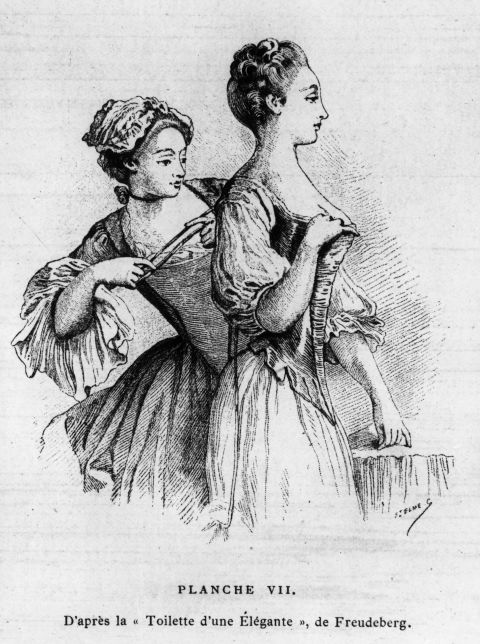
3. Because upper-class women didn't dress themselves.
This one is, by far, the most commonly cited
reasoning for women's left-sided buttons. Wealthy women with maids to
help dress them had buttons on the left to make it easier for a
right-handed maid to fasten them. There's some doubt about this theory —
one fashion history blogger
notes that men would've been dressed by a servant too in the 17th and
18th centuries. Meanwhile, buttons were rare on women's clothing until
the 18th century and only until after 1860 started appearing always on
the left for women — at least 100 years after maids/servants started
being used for such tasks. Another thing to mull over: Why would
upper-class people adjust clothing for the sake of the servants?
4. Because people wanted to mimic clothing of the rich.
To
add to theory #3, it is believed that even after people started
dressing themselves, buttons (once considered expensive items) stayed on
the left so the masses could copy wealthy women's clothing.
5. Because men carried weapons.
Men's shirts button on the right because they held weapons with the right hand and found it more natural
to unbutton shirts using the left hand. Women, obviously, didn't need
that convenience. This theory could also trace back all the way to
hunting and gathering days in which, as Katherine Lester writes in the
1940 book Accessories of Dress,
"a man's role as hunter required that he pull a weapon from left to
right. Fastening a garment from right to left would impede the movement
of our ancestors."
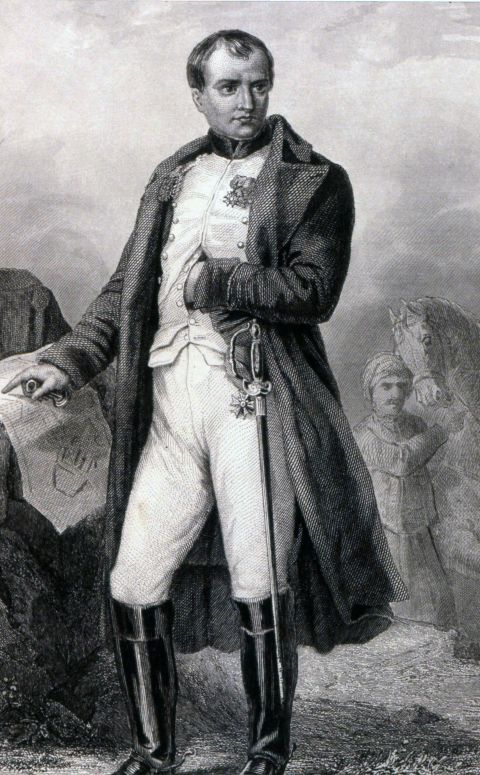
6. Because of Napoleon.
Women supposedly mocked the French emperor's hand-in-waistcoat pose
(then considered a mark of dignity) and apparently he ordered that
women's shirts be manufactured to button on the opposite side of men's
so they could no longer do that. This one's not totally believable (and
there aren't many reliable sources writing about this), but it's out there.
7. Because of gender inequality.
Nineteenth-century sexologist Havelock Ellis writes in Man and Woman: A Study of Secondary and Tertiary Sexual Characters
(published in 1894), that women's garments buttoning right to left is a
mark that women "seem inferior to men" in "strength and in rapidity and
precision of movement." He argues that women have weaker motor skills
because they require assistance in dressing (going along with theory
#3). Another theory
asserts that, as women's clothing started expressing emancipation and
borrowing more and more from men's clothing (see: pants), manufacturers
maintained buttons on the left as a practicality to distinguish between
men's and women's clothing. That practicality, however, is innately
about inequality as Kim Johnson, a professor at the University of
Minnesota's College of Design, recently told Vice, "As long as we have power differences between the genders, we will continue to have dress differences."
Thankfully,
the implied sexism of having left-sided buttons has become meaningless
in the mindless minute it takes to put on a shirt in present day. While unisex tops from a variety of brands
all maintain buttons on the right, the men's way traditionally, we
predict this mystery will eventually end up being a thing of the past
with the movement toward more gender-neutral clothing. Or, you know, we'll just deal with it.


No comments:
Post a Comment